Case Study
Automated Spacewalk Task & Route Advisor (ASTRA)
Helping EVA planners understand route constraints, compare alternatives, and communicate recommendations more effectively.
25%
Reduction in negative workload-related emotions
15%
Increase in decision confidence
Positive feedback
NASA personnel and EVA experts expressed enthusiasm about the concept.
01. Overview
Supporting expert decision-making in high-stakes environments.
The Challenge
During Extravehicular Activities (EVAs), or spacewalks, NASA Mission Control planners are responsible for evaluating route options, monitoring changing mission conditions, and communicating recommendations to multiple stakeholders. These decisions must be made quickly in a high-risk environment where safety, efficiency, and coordination are critical.
At the time, planners relied on fragmented tools and disconnected data sources to gather information, compare route options, and justify decisions. This created unnecessary cognitive load and made it difficult to confidently advocate for plan changes during an active mission.
The Outcome
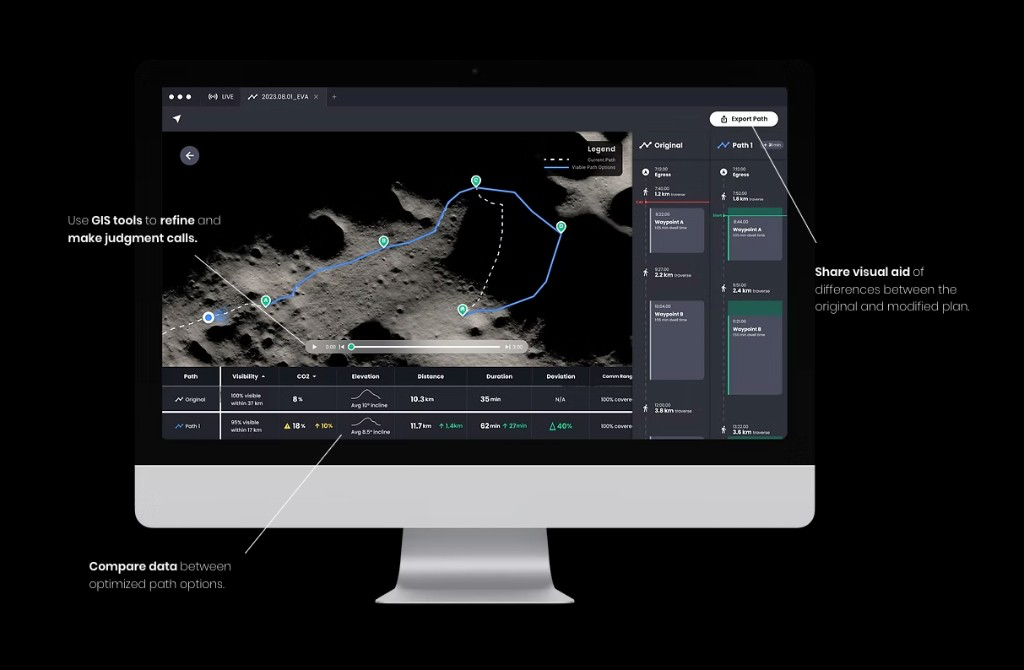
Our team designed ASTRA (Automated Spacewalk Task & Route Advisor), a decision-support platform that helps EVA planners understand route constraints, compare alternatives, and communicate recommendations more effectively.
Testing with NASA personnel demonstrated:
- 25% reduction in negative workload-related emotions
- 15% increase in decision confidence
- Positive feedback from EVA experts and engineers
02. Research
Understanding how EVA planning works under uncertainty.
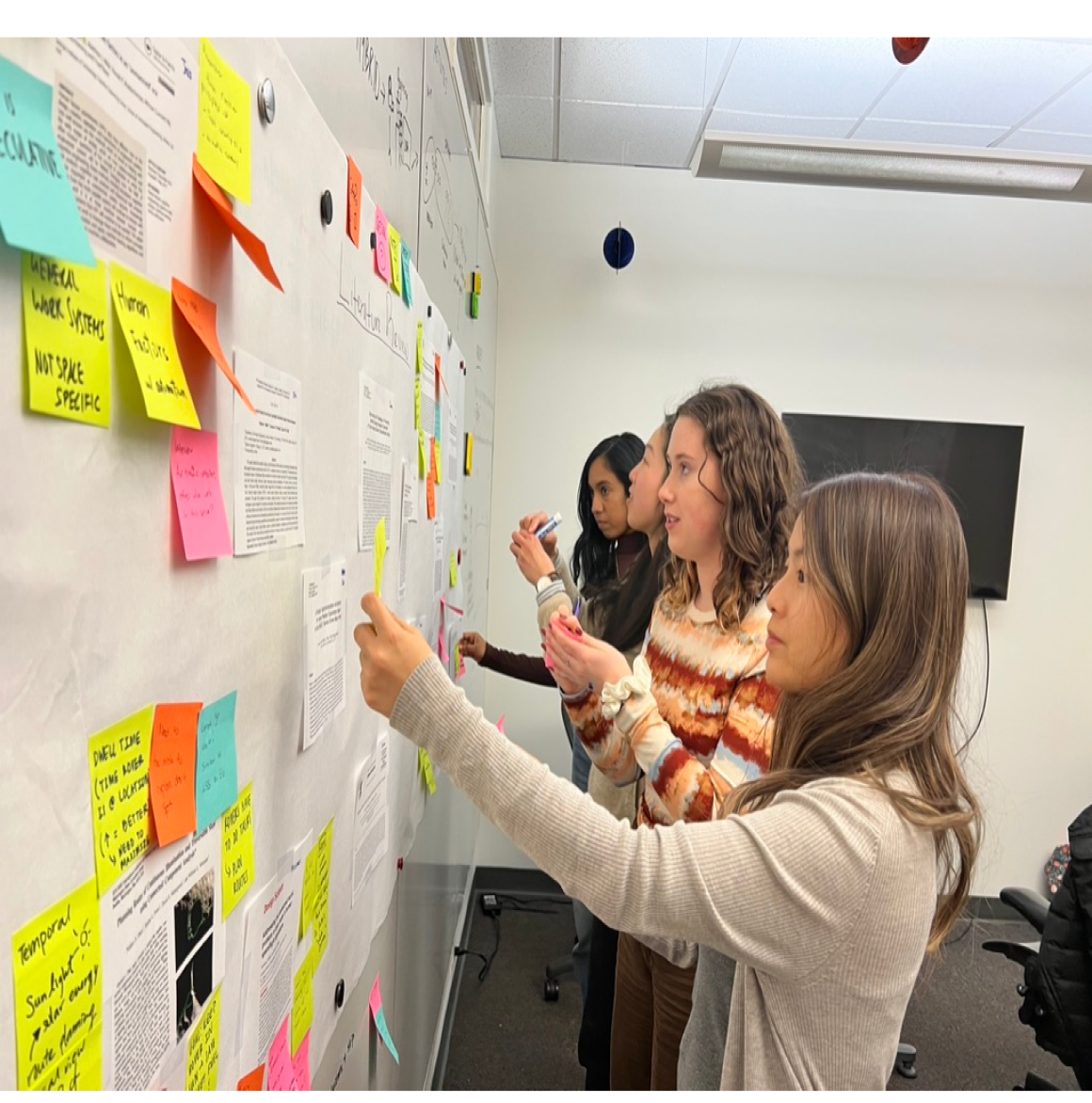
Our team spent time understanding how EVA planning actually works and where friction occurs.
Our research combined domain expertise, field-inspired exercises, and behavioral observation to uncover how planners make decisions under uncertainty.
Expert Interviews
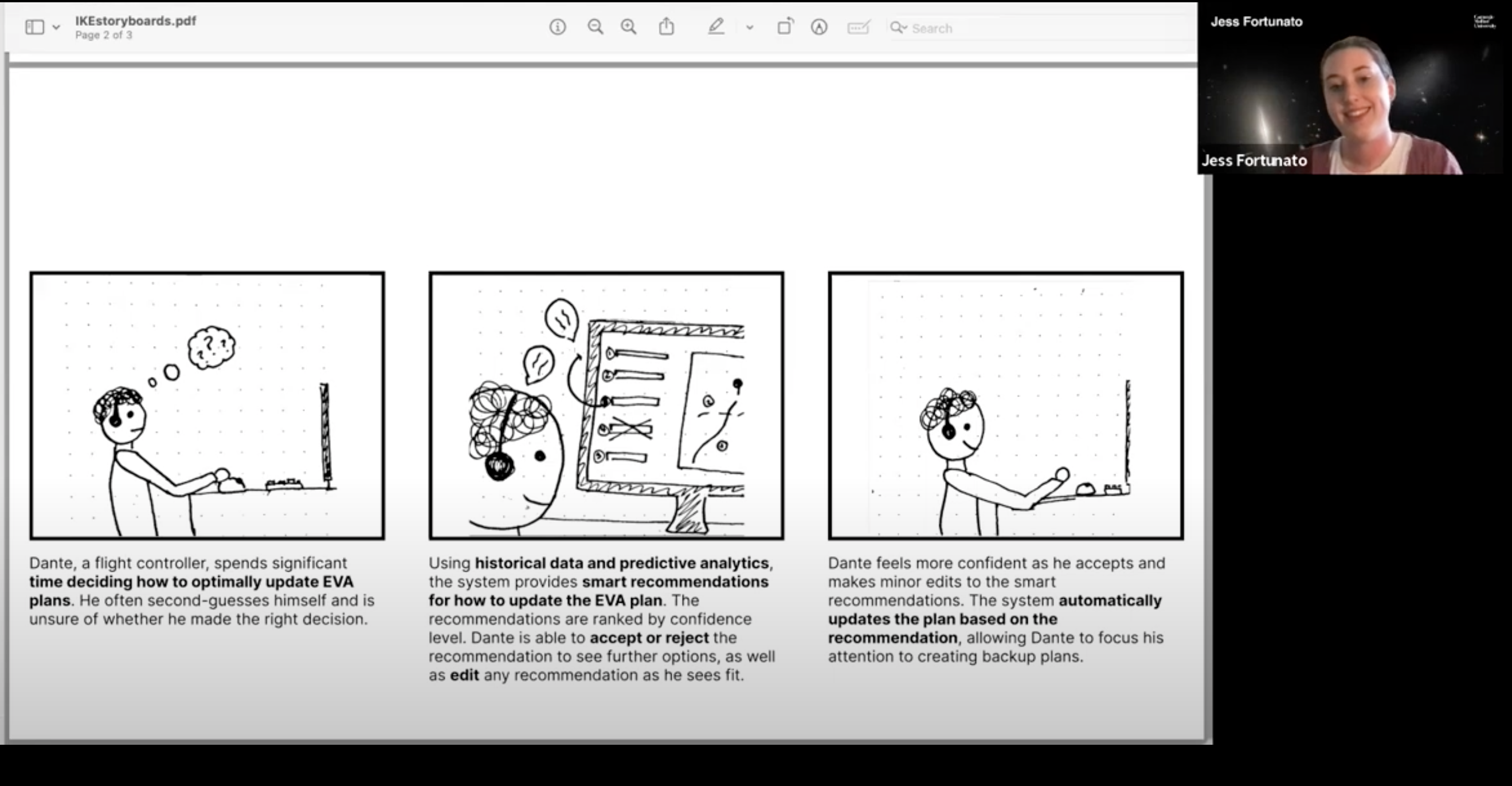
One of the most valuable aspects of the project was the opportunity to interview astronauts, flight controllers, and NASA engineers.
These conversations helped us understand how decisions are made during EVAs, what information planners rely on, and where communication breaks down between stakeholders.
Analogous Domain Research
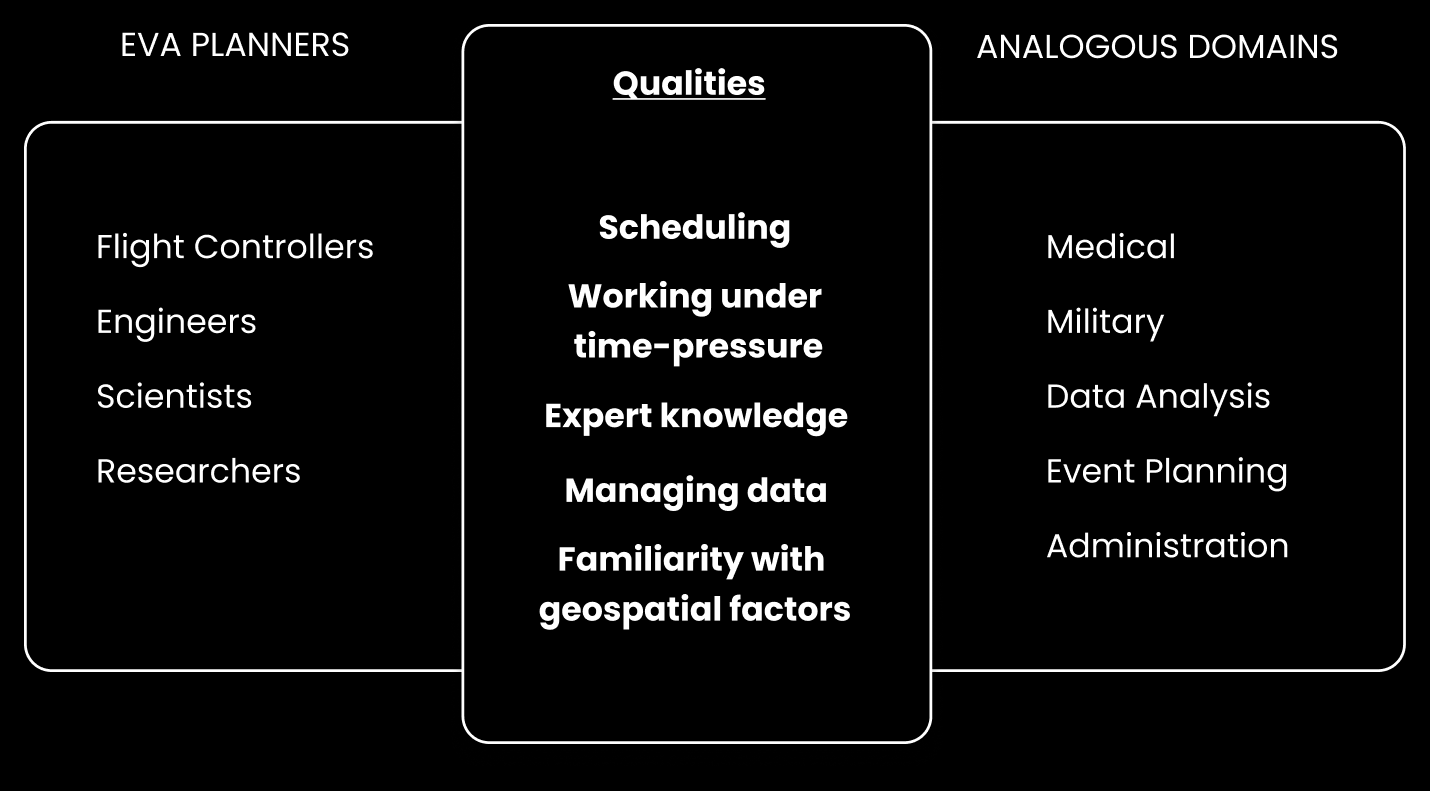
Because EVAs are relatively rare and difficult to observe directly, we also studied professionals working in other high-stakes planning environments.
Using methods such as directed storytelling, storyboarding, and card sorting, we explored how experts make decisions when operating under time pressure, location constraints, and changing conditions.
EVA Simulation
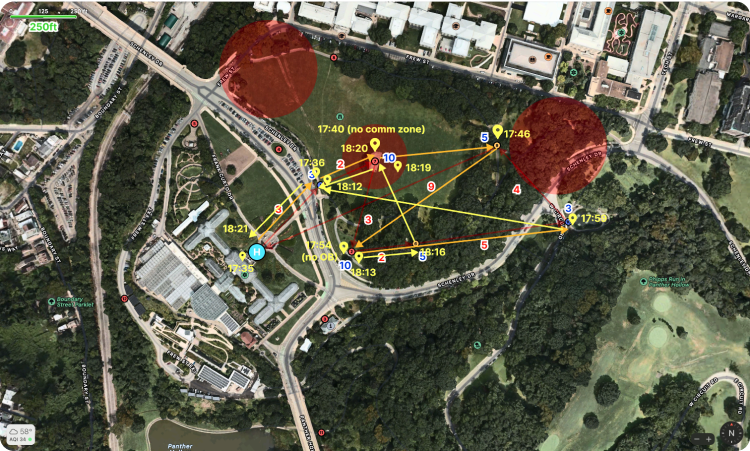
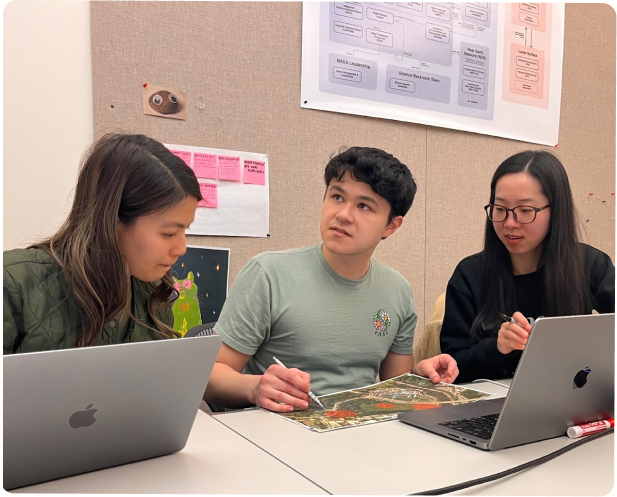

To build empathy and better understand the planning process, our team created and executed a simulated EVA exercise.
By taking on both astronaut and Mission Control roles, we experienced firsthand how quickly plans can become outdated and how differently participants perceive the same situation.
03. Key Insights
The core challenge was not simply route optimization—it was shared understanding.
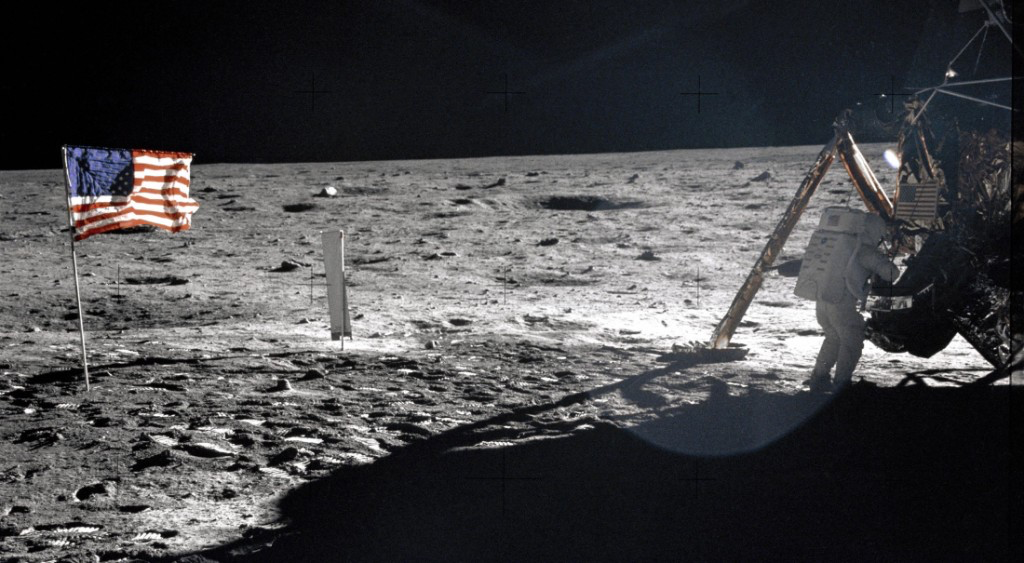
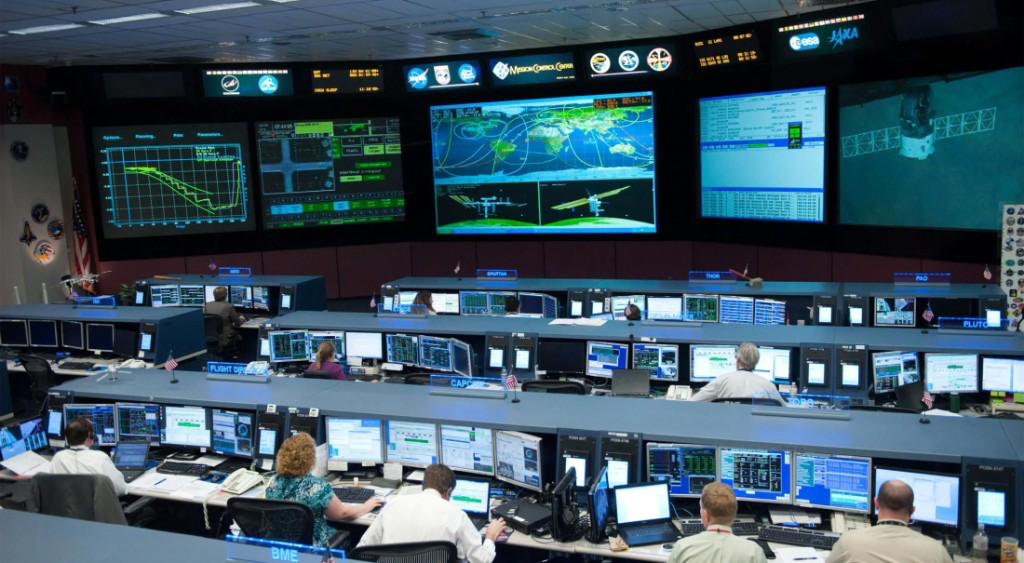
Different Mental Models
Astronauts and planners view the same environment from completely different perspectives. What seemed obvious to one group was not always interpreted the same way by the other.
Critical Information Was Fragmented
Planners pieced together data from disconnected tools, spreadsheets, and scratch paper. Context was lost in discussions and updates, increasing effort and reducing shared understanding.
Communication, Not Confidence
Planners were already confident in their recommendations. The challenge was communicating the reasoning—tradeoffs, constraints, and plan deviations—without duplicating work across teams.
04. Design
Designing a decision-support system that strengthens expert judgment.
Defining the Opportunity
At the start of the project, we framed the problem as route optimization.
By the end of research, we realized that route generation was only one piece of a much larger challenge.
The real opportunity was to help experts:
- Understand complex situations more quickly
- Compare alternatives with confidence
- Build shared understanding across teams
- Communicate and justify decisions effectively
Designing ASTRA
ASTRA was designed as a decision-support system that combines route planning, situational awareness, and communication support into a single workflow.
Design Principles
Create a Shared Source of Truth
One hub for mission data, routes, and decisions—so planners weren’t stitching context together across tools.
Automate Constraints, Not Judgment
The system generated feasible routes and filtered out unsafe ones. Experts kept the decisions that needed judgment.
Support Decision Advocacy
Visual artifacts made alternatives, constraints, and tradeoffs easy to explain—so recommendations could be advocated for, not just made.
Key Features
Route Generation
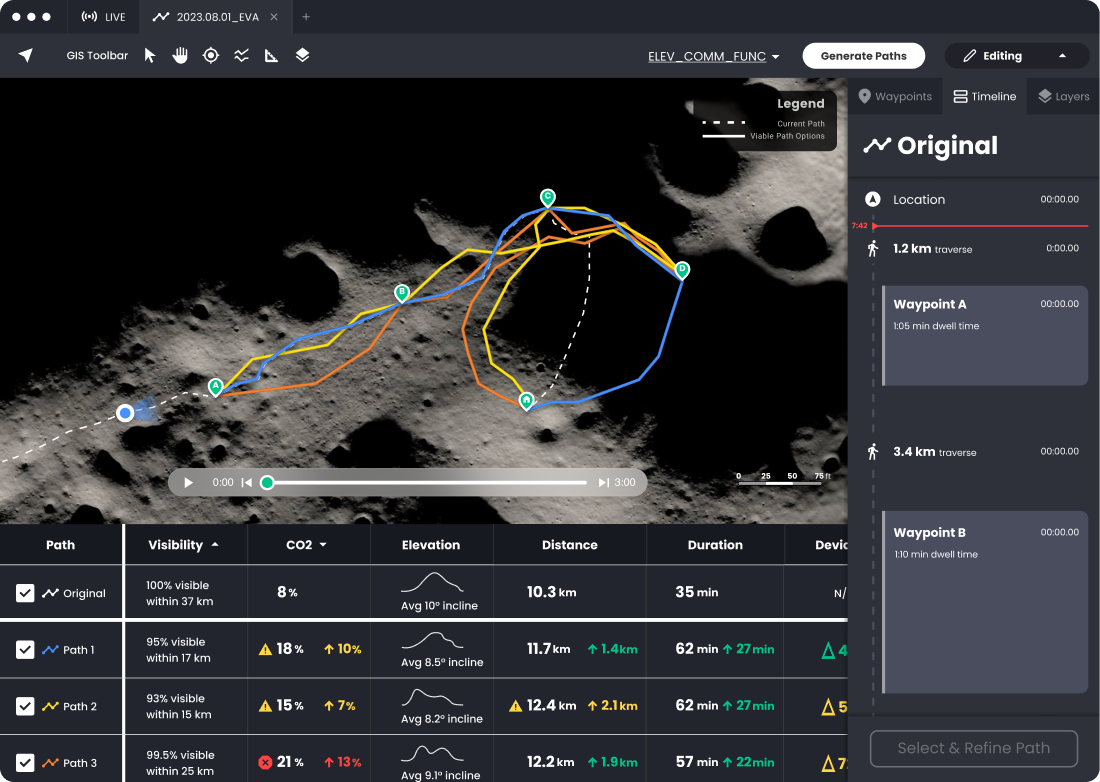
Planners select waypoints and optimization criteria, and the system automatically generates feasible route options while filtering out unsafe paths.
Route Comparison
Integrated route statistics allow planners to compare alternatives side-by-side and evaluate tradeoffs more efficiently.
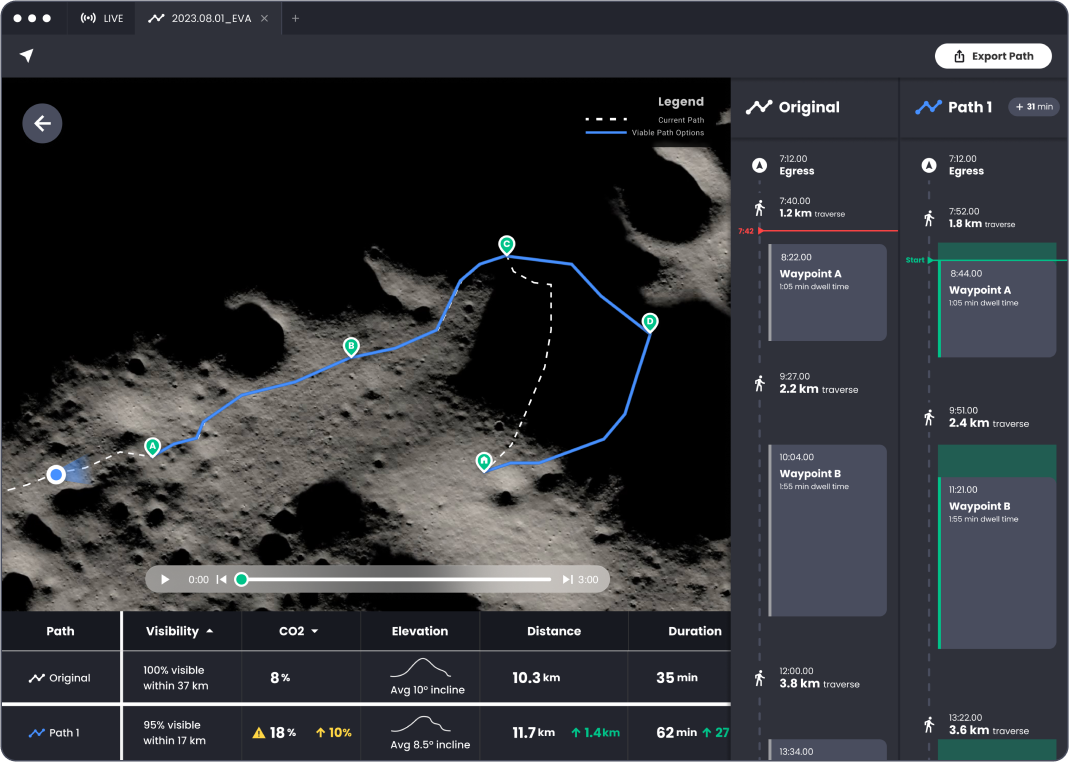
Live Monitoring
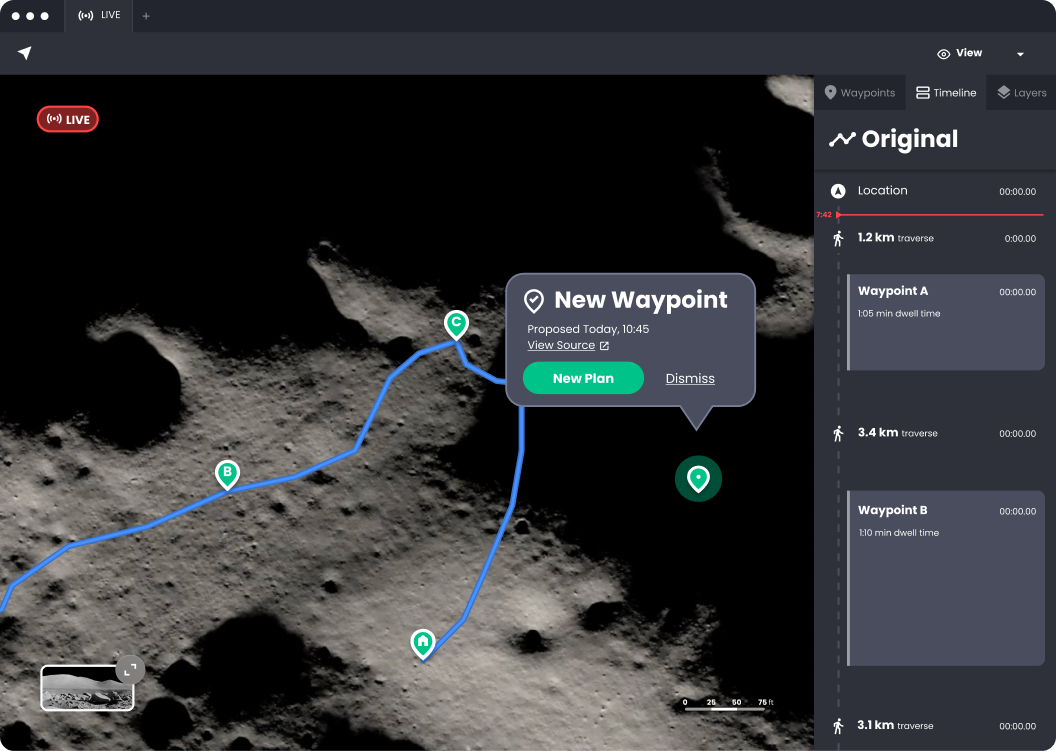
During active EVAs, planners can monitor astronaut progress and identify deviations from the planned route.
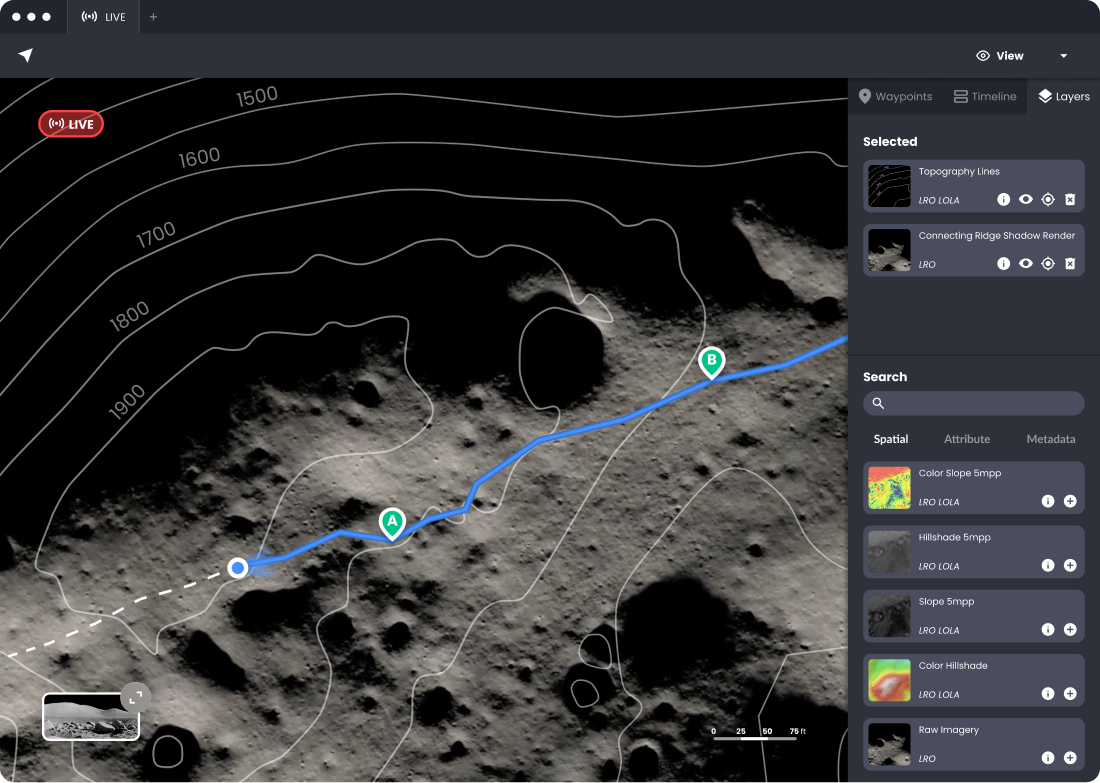
GIS Data Layers
Spatial and environmental constraints are visualized directly within the planning interface, helping planners better understand operational conditions.
05. Iteration & Validation
Testing ASTRA with NASA personnel and EVA experts.
Validation Approach
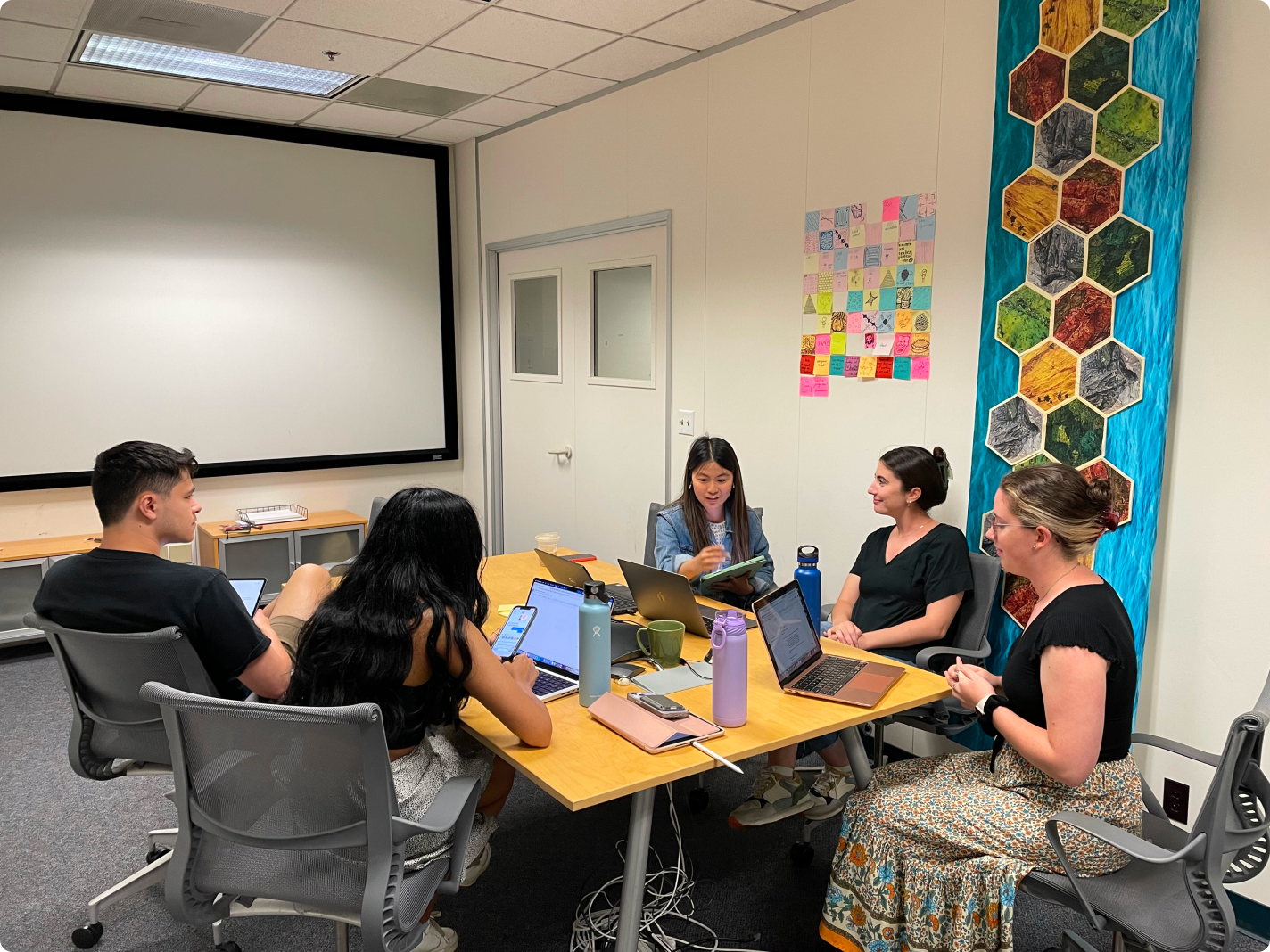
To evaluate whether ASTRA could improve the planning process, we conducted structured testing with NASA personnel and EVA-related experts.
Participants
- 9 NASA personnel and domain experts
- Participants with varying levels of EVA experience
- Weighted according to direct EVA expertise
Methods
Participants completed planning tasks using both:
- Existing workflow representations (control)
- ASTRA prototype (experimental)
We measured performance using:
- NASA Task Load Index (TLX)
- Confidence ratings
- Think-aloud observations
06. Results
Testing demonstrated meaningful improvements:
25%
Decrease in negative workload-related emotions
15%
Increase in confidence when explaining decisions
Participants also expressed enthusiasm about the concept, with one EVA systems engineer stating:
I hope we actually get to use a tool like that.
— EVA systems engineer
These findings reinforced our belief that ASTRA's greatest value came not from automation alone, but from helping experts understand, compare, and communicate decisions more effectively.
Read more about this work on Medium (opens in a new tab)